Saturday, 23 February 2013

Don't Go Chasing Waterfalls


Myself and the elective kids.


January would have been an exceptionally challenging month – a distinct shortage of doctors and nurses (what’s new) and an overwhelming number of sick children. To top it all off I was meant to be preparing for UK job interviews. However, the arrival of three medical students from the UK helped me keep my sanity in check. I love having students around, whether I’m home or abroad; it makes for a stimulating and exciting environment: sharing ideas, knowledge and stories. In addition, what made this group (Dom, Mal and Georgie) particularly good was the fact that 
Malik getting sized up for some
new trousers during a ward round.
they like to eat, play and explore: which, is exactly how I roll.  The big house that I live in was finally buzzing with life and now that they’re gone, I must say it is rather quiet. However, they’ve left their footprint – pictures all over the walls from weekend japes, blood smeared from floor to ceiling after several mosquito massacres and some truly excellent memories.


I had initially taken two weeks off to return to the UK for interviews, but cut my trip to 4 days and returned early for an impromptu trip to Madagascar with them. They say you only live once, and the South African government does pay me rather handsomely. Needless to say I am rather broke now, but it was definitely worth it. If you ever get a chance, I would recommend Madagascar to anyone: beautiful people with a real joie de vivre, scrummy food, charming architecture, magnificent scenery and, of course, loads of Lemurs. I only stayed for a week – Holy Cross was beckoning me – but, it was enough to get a taste of its wonder.

Smiley Madagascan children.


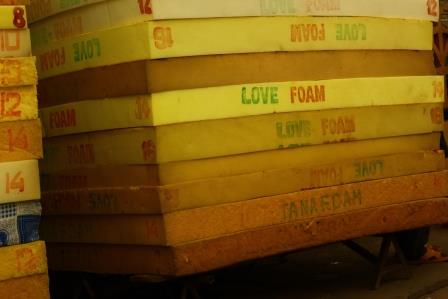
"LOVE FOAM" - the only mattress to sleep on in Madagascar.

***

Whilst the students were here, we embarked on some truly excellent weekends; keeping it local and exploring the Wild Coast, a.k.a. my hood. On their last weekend with me, before I flew home for a quick interview, I organised a trip to Mkhambathi: the beautiful nature reserve at the end of my road. There were twenty of us and a lot of fun was had, which included some excellent beach volleyball (courtesy of the students spoiling Holy Cross with a brand new net – I now have to dig up a pitch: watch this space) where Great Britain slammed the Netherlands; plenty of braais (BBQ’s) with some devilishly good dry rubs over the meat; sunsets; sunrises; swimming; frolicking; green shooting stars; and my good friend Ben having a near death experience.

I have mentioned in previous posts that the thing that makes Mkhambathi so special is this magnificent waterfall that dumps straight into the sea. Last time I visited the falls the water level was pretty low; this time, being the wet season, the river was engorged, creating a spectacular thundering aquatic feature.


Friends absorbing the magnificent power of the waterfall.
Ben is one of my dearest friends and also happens to be a British doctor working in South Africa. The story is a little vague, but he was walking along the top of the waterfall, lost his footing and slipped. Fortunately, he landed on a ledge. Unfortunately, he was stuck: pummelled with white water and a potential 15 metre drop into a shallow pool, he was holding on with his bare hands to a couple of small rocks and getting very cold. The other great thing about Mkhambathi is that it is really isolated and there is no phone signal; this isn’t so good when one needs help.


Ben - a little stuck. We didn't really take any photos
 as it was shortly after this snap that
 my friends realised he was in trouble.
My initial reaction to what was going on involved a lot of expletives from me, directed at Ben, and complete dismay. I had actually been lagging behind, taking in the scenery and checking out the swell rock pools with a friend before we knew what was happening. By this point, Ben had already been stranded for about 20 minutes. A party had run off to get help: one car was sent to get phone signal and beckon a chopper, if need be, and another returned to the scene with food, blankets and some equipment. Obviously, the car that returned to the scene was Mitch. Unfortunately, a barrier on the track meant we couldn’t get him close enough to use the winch. Instead, four car tow ropes were tied together and thrown down to my stranded friend. At this point he had been in the water about an hour. There was quite a bit of discussion as to how we would pull him out: the rope didn’t have much slack and it would take several people to pull Ben across with the added weight of water pummelling him. We agreed to shimmy him across the waterfall, on its ledge.


The thundering noise of the falls made it almost impossible to communicate with Ben; hence, there were a lot of gesticulating hands. Without further ado, we attempted to pull him across. At one point, he disappeared under the falls. I happened to be the one at Ben’s level, trying to give a few instructions to him or the burly crew handling the rope. Imagine me, shouting at my friends who were pulling him, trying to get them to tug more as I lost sight of Ben under the dramatic blanket of water. It felt like an eternity, but couldn’t have been for more than ten seconds. Minus one pair of shorts, we pulled my dear friend to safety and I gave him the biggest bear hug I have ever given any man. Whether he remembers or appreciated this, I do not know. The relief from everyone was massive; it was one of those “999” (the TV show) experiences, but with a very happy ending.

Once we got Ben back to bed, the fun recommenced, but not before an impromptu dance to the TLC song “Don’t Go Chasing Waterfalls.”

You may be pleased to hear that I managed to get this event into my job interview in response to the question: “So Dr Craver, can you tell us of a time outside of work where teamwork was important?” My answer: “Well, as a matter of fact, yes I can. Just last week…”
 

***

This is probably as good a time as any to mention the fact that I shall be leaving Holy Cross at the end of March. After about 20 months of work, I have finally handed in my notice. It is with mixed feelings that I am leaving, but something I am ready to do; the prospect of returning to my dearest family and friends fills me with glee, but I shall be sad to leave my Holy Cross family.


Busy at work in casualty. One could say it looks like we have too many doctors. Oh how I wish that was true.


Dom and Dom.

 
Good TB preventative measures: fashion always wins.


Thursday, 14 February 2013

One Sunday in January


Before you read this, I have an announcement. My good friend Kim Turley, out of the good will of his heart, has kindly constructed a website for Holy Cross. It is still a work in progress, but do have a quick browse.


***

The weekend was coming to a close: it was Sunday night, I had triaged all the patients in casualty, maternity was quiet and the wards were sleeping. I got to bed at around one am and drifted immediately into slumber land. Within the hour I was awoken by the extremely unpleasant screeching of my house phone– the sound is far worse than any bleep I have ever carried back home.  The sister in casualty had some urgency in her voice – there were two young children with, as she put it: “serious burns.” Now, the staff at Holy Cross see burnt children all the time and they are well versed at managing the less severe cases. On that basis, I knew that I wouldn’t be going back to bed for some time.

I threw on my clothes and ran down to casualty in the rain. What lay before my eyes were two sisters of five and nine years old who were in a really desperate state of affairs. A candle had fallen on their bed whilst they were sleeping and set fire to some extremely flammable bed sheets. Both had deep burns covering almost 60% of their little bodies, which in itself carries a poor prognosis. However, to confound matters both children were freezing: they had been brought by their family through the pouring rain and were sodden.


This is the younger sister, all wrapped up in
 a red bin bag and ready to get in the ambulance.
The girls were in a state of shock, but still alert, talking and crying. I turned the heating on to “full” in our resus department and proceeded to get very sweaty whilst I resuscitated them. With burns, one loses a lot of fluid, hence, what goes out must be put back in. I placed a femoral line (a drip in the groin) in both girls and filled them with warm intravenous fluids as well as catheterising them. Now, I thought, how can I keep them warm? I looked around the department and came back with two large red clinical waste bags. The idea, in burns management, is to reduce the amount of fluid that is lost by creating a synthetic skin; hence, cling film would have been ideal. With my girls relatively stable, lying in bin bags and under several blankets, I referred them to our burns unit.


My colleague on the other end of the line was reluctant to take them at first, given the severe degree of their injury, but eventually agreed to have them transferred. The ambulance took eight hours to arrive – our commonest and most frustrating rate limiting factor. The sisters both got into the ambulance and seemed relatively stable, but neither made the 4 hour drive.

Deep down I knew that their prognosis was poor, especially with my limited experience in such cases and the sub-optimal facilities that we offer. However, I had to try; we had to try. The nursing staff at Holy Cross really do try hard, despite all the barriers that they are faced with. Those few times when it works and when things go well, even if there’s an unhappy ending, at least we can say we did the best we could; we achieved something.
***

This fella has a massive pericardial effusion (fluid around the heart).
Normally the heart (the big white thing in the middle) sits snugly in the middle of the rib cage and is rather small. He was exceptionally short of breath as the fluid was causing a cardiac tamponade (squeezing his heart so it cannot function correctly)...
 
...The only way to relieve the tamponade is to remove the fluid. Under ultrasound guidance I inserted a cannula (large needle) into the sac around his heart: a rather frightening, but lifesaving, procedure....
...Out came over 2 litres of blood stained fluid. This is the classic for TB pericarditis. The guy was started on TB treatment and steroids and is now doing very well.

Monday, 11 February 2013

Belated New Year's Greetings


The all too familiar "jump'n'shoot" pose at the top of Port St John's
 airfield with the UK student clan.
Left to right: Me, Mal, Dom (there's another Dom) and Georgie.

I must apologise: Job applications, a couple of flights to the UK, impromptu trips around the Wild Coast, falling in love, working like a dog, playing like a pig in roses and a lack of sleep has put this blog on hold for the past month or so.  However, it hasn’t been for a lack of tales. Oh no, there is plenty to be told, except that I do not want to bore my audience with pages and pages of script. To make things more palatable I shall write a couple of instalments on January.


The halo of clear fluid around the blood is CSF
(cerebrospinal fluid) that was leaking from a
 guys ear who had sustained a skull fracture
 following a road traffic collision.

I shall start where I left: in my last entry I was en route to the UK for a festive week at home with my beloved family. My first day back at Holy Cross was New Year’s Eve. Imagine my glee when I found out that I was to be on call alone for the ensuing 24 hours. Not that I don’t work by myself most of the time when on duty, but it is always nice to have that “phone a friend” option in times of crisis. My main concern, however, was the fact that there would be no anaesthetist for the C-sections. So, I planned ahead and called colleagues at my local hospital informing them that I would have to send any mother that couldn’t deliver vaginally to them. I don’t think they were too happy, but I didn’t give them a choice and in the end I only sent one lady.


One of the many mashed up hands: kids,
don't play with fireworks.

The day had an ominous start – at 9 am I put in my first chest drain into an elderly lady who had been beaten, bruised and stabbed in the chest: a grim and exceptionally sad tale, but something that isn’t uncommon. Fortunately, that was all there was for the next 24 hours of any real note. No knives to the heart, no blades through the lungs, no bullets traversing the skull. There were, like last year, several firework incidents that brought in a delightful selection of blown off digits and thumbs. I had to amputate the end of one guy’s finger whose bone had been squashed like a Panini and then chewed on by a very hungry teething child.


After the slight anti-climax of New Year’s Eve, Holy Cross threw a curve ball. All of a sudden we had gone from 7 to 3 doctors: one had left and three were on leave. It was a pretty cruel two weeks: dousing the fire, telling patients who had just travelled a day to see a doctor that they should return next week as their complaint wasn’t urgent; the wards were all but abandoned and left to survive on their own as we struggled to keep maternity, paediatrics and casualty going. Hence, there was little blog writing time for me.

A lot of children died in January, but I don’t think it was entirely because of the doctor shortage. There had been an alarming number of kids who presented in respiratory distress and renal failure as result of herbal intoxication. Traditional medicine is a very interesting subject, and when done well I’m sure is very good, just like the allopathic medicine that I know and practice. Both fields handle some exceptionally toxic substances. Unfortunately, some of the traditional healers have recently been using some exceptionally potent enemas (that’s right – bum is best over here) to cure a mild cough or a bit of diarrhoea. Instead of fixing the sniffle, children have been dying. When they get to us, with a bit of support and care, they sometimes get better. However on several occasions, as if there had been a massive communication breakdown in explaining why their child got ill, the parent repeats the enema and the child dies. For me, though, the most poignant moment during those hellish two weeks was certifying a beautiful little baby who had died as a result herbal intoxication. She wore a T-shirt with the inscription: “I’m not sleeping, just recharging.”

***


"Kiss me," the caption on one of the pairs of slippers that the
night staff were wearing.
It’s not been all doom and gloom though. There have been plenty of smiles, and even tears of joy, brought to my spritely face on a daily basis here at Holy Cross. They say it’s the small things, and when I looked down at the feet of the nursing staff running a busy Saturday night in casualty to see them all wearing pink fluffy slippers I couldn’t help but giggle. Although, it was a two way affair as they find the fact that I wear my wellington boots during the night shifts hilarious. However, I believe they are very practical: I get snake protection for the 300 metre walk from my house to the hospital; blood and other products can be wiped clean; I can pretend I’m at Glastonbury – not so practical, but it keeps me sane.


A gathering of "believers" collecting
 passers-by as they trundle down
 the corridors. To where though,
I have no idea.
During the end of that exceptionally exhausting and emotionally draining first two weeks of January I was greeted by a mass of people blocking my way to the ward. They were slowly marching down the corridor, banging their drums, dressed to the nines and singing the most sublime chorus. It brought a tear, well several tears, to my eyes. I have a real admiration for the faith that some of the people in this community have, even though I don’t share the same beliefs or attitudes towards life as they do. However, I could not help but be moved in a deeply visceral way.

***

I shall leave it there for now and write more on January soon where I had waterfall filled excitement with friends and a swell trio of UK elective students.
Myself and Mitch riding the wind atop of Port St John's airfield.

Myself in an extremely precarious spot above Port St John's.


Remember this guy? He came in weighing 10kg at 10 years old.
 Just over a month later and he now has life in his cheeks,
 a spark in his eyes and is now weighing in at almost 20kg.
 I didn't recognise him at first.


Friday, 21 December 2012

Cuttim Skin Blo Het Blo Kok


Women and children greeting myself and Ding (top right)
 after we visited a boma.
Christmas is upon us and that means two things at Holy Cross: stabbings and circumcisions. To be fair, both happen all year round, but there is a particular abundance of cases over the festive season. Why so many circumcisions? In the Eastern Cape, getting a traditional snip is a big deal; it is a coming of age thing, a boy becomes man affair, a rite of passage etc. I am not too sure on the history of it all as I have been told several different stories, but I am sure Google will give those interested a good answer.

Two khwethas from the illegal
boma - we took them home to their
parents.
For all this coming of age stuff, these young men risk a lot. Last season (we call them seasons, there are two per year and both coincide with the school holidays) we had one death and three auto-amputations – that’s when a man loses his penis secondary to infection: a particularly grim affair. Someone could go from attempting to become a man to losing probably one of the biggest symbols of their man-hood. However, when done right, the ritual is an impressive affair: Day one the foreskin gets chopped (traditional style) and put on the initiate’s, a khwetha’s, forehead – this is called the torch (something about shining the light forward and no looking back – well, they’ll never get their foreskin back); day 1-8 the khwethas stay inside a boma (a small hut built for the occasion), aren’t allowed to go outside, get little food and water and have to chant all night to scare off the witches; Day 8 they come out, eat a freshly slaughtered goat and do man stuff (singing, collecting firewood, putting clay on their face – that’s for witch protection – and so forth); for the rest of their time, about a month, they live in the boma, do a lot of chanting and get the occasional beating, possibly to show others how masculine they are; at the end of it all, the boma is burnt, they wash in the river and hey presto: MAN!
The kids were very excited after our trip to a boma.
My colleague Ding teamed up with some local healthcare workers, including a guy named Patrick who has done wonders for men’s livelihoods, to improve the public health campaign on safe circumcisions. They really have done a sterling effort and this season has seen only three admissions (that’s rather low) at Holy Cross. I stepped in for Ding last week and visited four camps, including one illegal site where I had my own police escort. I felt exceptionally privileged to get a glimpse of this local tradition, as without the guise of being a doctor on a special mission, no regular person would be let in. To be honest, all of the penises looked pretty nasty and it took some time to work out what was acceptable and what not. In the end, only one boy got taken back to hospital for admission. Fingers crossed he will make it back for his crossing the river ceremony, penis intact, and leave Holy Cross a man.
****
The young man - chest drain in, eviscerated bowels, about to
be wheeled to theatre.
Circumcisions going wrong are one thing, stabbing and the occasional gun shot is another. Matters have not been helped by our recent shortage of intravenous fluids, which has made resuscitation rather difficult. Last week a young guy was wheeled into casualty with his intestines out for all to see. His friends were obviously concerned, as all five left straight away – maybe they weren’t his friends at all. As I assessed him I noticed these findings: he was heavily intoxicated with alcohol, in a fair amount of pain, had blood and air in his right lung (a haemopneumothorax) from a very small stab wound on his back and  had eviscerated his bowels. So, I popped a tube in his chest to drain the blood and air, gave him our last bag of IV fluid and asked my boss to come help repair the small bowel lacerations before sending him to our referral unit. All went pretty smoothly, I was working with my favourite selection of nurses, which is always a bonus, and the man was relatively stable. Unfortunately, he was bleeding into his abdomen and needed major surgery – something we cannot do. I hear he made it to our referral unit and I am led to believe he got to theatre, but he died later the evening as a result of his injuries.
Why do I mention this case? It is not a particularly uncommon occurrence. However, I just wanted to highlight the difficulties we have with stabilising our critical patients (a lack of fluid and blood) and getting them transferred for definitive care. A surgeon and anaesthetist would be nice, better administration and management would be the dream.
The man made it to the referral unit,
but died later of his injuries. In the red
is Mr Beja - one heck of a nurse.
****
Working at Holy Cross constantly stretches my abilities, and nerves for that matter. There is uncertainty every day and staying sane can be tough at times, however I do seem to thrive off it. Saying this, there are occasions when I wish I was in the comfort of a big NHS hospital with lots of support around. I have just come off working 18 days straight, which included two 72 hour weekends on call. During the first weekend I was called to assess a mother in labour at about 2 am on Friday night as the baby’s hand was coming out of the cervix (for those that don’t know, head first is the usual way and occasionally feet first, but hand first just doesn’t work). The midwife wasn’t wrong: as I felt inside the mother’s vagina I was greeted by a tiny little handshake. I tried to push the arm back, but the baby really didn’t want to let go, so we went for a C-section. I performed the procedure and delivered a very healthy boy. However, getting the new born out was probably the easiest part (normally, it’s the hardest).
To start with, the uterus was rather vascular and bled quite a lot. Bleeding is normal, but sometimes there is too much of it. Secondly, the placenta was stuck (placenta accreta), so I had to manually remove it, which took a few moments. Thirdly, well initially I thought there wouldn’t be any thirdly – the procedure was almost over. I closed the uterus, tied the tubes (she had requested a tubal ligation as she already had four other children) and stopped all the bleeding. Or, so I thought. As I assessed the wound I saw a very unpleasant pulsatile ooze coming from one corner. Turns out I severed the right uterine artery, something you really do not want to do. This may have happened during the all too easy delivery of the baby. I couldn’t clamp it, so instead I tied a catheter (a tube usually reserved to help people pee) at the base of her uterus to tamponade the bleeding. As I, or my boss, were unable to ligate the artery, I left the catheter in situ (a salvage procedure) to stop the bleeding, closed her up and referred her to our obstetric unit 4 hours away for a hysterectomy.
This was a particularly good learning point for me – all procedures carry risks and having a decent idea of how to prevent and manage these outcomes helps. Tying the catheter at the base of the uterus is something I have only read about, but at least I knew about it and I knew what to do: DON’T PANIC. As a result, the lady made a good recovery.
****
By the way, “Cuttim Skin Blo Het Blo Kok” is Tok Pisin (national language of Papua New Guinea) for circumcision. I did part of my medical elective there as a student and have fond memories of assisting circumcisions, mainly because as we would near the end of the procedure we would say “clos to pinis now,” which means almost done.


This young boy has disseminated varicella zoster virus (chicken pox) all over his body - inside and out. He is HIV positive and was neglected for quite some time, but now he is doing very well.


This is a reminder card that I designed for HIV treatment initiation - there are still some changes to be made, as this is the pilot scheme, however, I was very excited to see it being used by one of our local clinics.

A 10 year old boy weighing 10kg - this is something nobody should ever see. He is severely malnourished due to HIV and a probable underlying TB infection. Fortunately, he is improving and now weighs a spritely 14kg.

Dancing in Durban at The Rainbow Restaurant - possibly one of my favourite haunts. I'm the guy in the black on the right - I'm now beardless.

Thursday, 6 December 2012

Part 2 - Battery acid and buttocks.

We've had students from Cape Town. As you can see, it's all smiling faces in rural health care. On the far right is Dr Veldman and Dr Jimoh.

Happy students

As I mentioned, work has been busy. Each day has been filled with exc itement and a fair amount of head banging. The strikes are coming to a close and business is starting to resume as usual. However, with Christmas just around the corner everyone is going on  holiday – this includes the pharmaceutical depot and the outpatient department at our referral unit. Hence, we are still low on essential drugs and equipment. At the moment we are scrubbing for theatre with regular soap. To add to matters, our radiographer says the X-ray machine has broken down. It all seems a little too convenient – the machine stopped working last December. He took four weeks of “sick” leave due to his asthma, but refused to let us see him or get a referral to another hospital. In some ways I don’t blame him – he is on his own and has quite a heavy workload, but then so do we all. Unfortunately, Christmas is when an X-ray is vital – it’s the stabbing season.

This poor baby was born with a large vascular
 lesion where her bottom would usually be.
 It could possibly be a teratoma or dermoid
 cyst (remnant of an incomplete twin).
We referred her, but she didn't survive.

With all the excitement and goings on, I’ve written a list of some of the memorable moments from the past month:
-          I walked into the surgical unit one weekend to review someone. On my way through the ward I encountered one patient cutting the nails of another who was too sick to do it himself. I’ve noticed that patients look after one another on the wards – the ones that can walk fetch water for the ones that can’t and, from what it seems, even help out with a bit of podiatry.

-          I was reminded of the lady I saw last year who had used so many rectal enemas that her anus had almost closed up secondary to scarring. She came back to see me with similar problems. After receiving treatment (anal dilatation) at our referral unit, she continued to use the enemas again.  I’m pretty sure I told her last time that putting battery acid in ones rectum is probably a bad idea.

-          I called a colleague to assist me with a difficult delivery. With a bit of persuasion and some good pushing from the mother the baby started to come. We did a suction delivery, but the little one got its shoulders stuck – the head was outside the vagina and his body still in the womb: a shoulder dystocia. A few simple manoeuvres and out popped a very flat bubba. We successfully resuscitated him and then the nurse called me back to the Mum. She had a 3rd degree tear – that’s when the laceration goes nearly all the way into the rectum. I’ve never dealt with one of these before, but knew the theory. So, there I was – head torch on, forceps and suture in hand and my trusty step by step obstetric book on my lap. I think I did a pretty good job. In hindsight, we should have done an episiotomy, which would have avoided the tear – but it slipped our minds in the heat of the moment.

-          It’s circumcision season. If you want a traditional one you need to be over 18, have parental permission and a nod from the local chief. A guy came in last Saturday night who was denied this opportunity by the chief. He was so desperate to lose his foreskin that he took a pair of scissors to his member and gave himself the snip. Might I add that he was stone cold sober. Good thing that, for he may have cut off more than intended. He did a rather good job and all I had to do was stop a bit of bleeding.

-          “Doctor, a cow fell on my leg.” Quite how this happened, I don’t know. The herder said he was giving the cow some treatment and then it toppled over – it must’ve been some pretty strong stuff. Turns out the guy is also made of tough material as his bones seemed fine.
 

One shouldn't really see this X-ray - this big mass in the pelvis is a gentleman's bladder. Unfortunately the admitting doctor missed the elephant in the room. The old chap drained almost 3 litres of urine once I catheterised him.

This gentleman presented with severe shortness of breath. The X-ray shows a gigantic, or "globular", heart. He had a massive pericardial effusion secondary to TB (TB pericarditis) that we drained, much to his relief.


Some seriously arthritic hands - guttering, ulna deviation
 and swan neck deformities.
I have chosen an exceptionally bad choice of facial hair after removing the beard. Sorry Mum.


Wednesday, 5 December 2012

Part 1 - Toi Toi Nation

A rather large piece of corn that I removed from this child's nose (parental consent obtained).

Hello: I am still alive. It has been a few weeks since I last updated the blog. There are two good reasons for this:
1.       Work has been insanely busy.
2.       I have been filling out my UK Emergency Medicine job application .
As I have been kept on my toes at work, there is a lot to write about. Hence, I may break down the past few weeks into two parts.
Another case of ophthalmic shingles in an HIV positive lady.
The rash spares the nasal ridge, which means there is a reduced
chance of the eye being involved
.

The Eastern Cape Department of Health (the body that governs Holy Cross) has been in a bit of a crisis recently.  Strikes, or “Toi Toi’s,” have been rife throughout. It started with the nurses at our referral centre, then our pharmaceutical depot and finally the ambulance service. Unfortunately, rather than all go to the picket at the same time, it was spread out. So, once the referral unit opened back up, the pharmacy went on strike. Then, when the ambulance went on strike, we were really stuck. We had to keep unwell patients who required surgery, dialysis or higher care at Holy Cross and often just watch them die. To improve matters, we ran out of nearly all our essential drugs. A doctor is nothing without his or her tools of the trade.
There are many things that we all could have done better. There is a tendency here to put the blame on failing services to someone else; in this case, the pharmaceutical depot and ambulance. However, we managed to acquire essential magnesium sulphate (life saving for mothers with eclampsia), intravenous fluids and antibiotics from neighbouring hospitals after a few phone calls. Unfortunately, myself and colleagues always seem oblivious to medical shortages until we get told we have just used the last bag of saline or penicillin injection. We are now having talks with our pharmacist and nursing staff to find out ways that this can be prevented in the future.
****

He was beaten by the local community - a strong image. I liken it to how the health service here is currently being hounded.

This guy got stabbed in the back twice. I inserted a chest drain on
each side as he had developed bilateral pneumothoraces (air
around the lung)

The strikes have been terrible; however, a few weeks ago the hospital encountered a self made crisis – a result of poor planning from us, the doctors. Currently there are seven of us, but one Thursday this month we were three – one was on leave, two were at a course and the fourth had to take his car for a service (probably not the best choice of days). We can manage with three, as the hospital has done in the past, but patient care is grossly compromised. Unfortunately, that day we had three emergency c-sections, hence taking two doctors away from the outpatient department and leaving one in casualty. By the time I got to OPD in the evening, there were about 30 patients waiting even though we advised everyone to go home and return the following week. I felt terrible as I sent all, but one, home; to be seen the following week. I knew that some probably could not afford to return.
An impressive case of Malassezia furfur - a
benign yeast infection of the skin. The
gentleman is also HIV positive.
During the ambulance strike I had an unwell HIV positive young male on my ward. He had developed confusion secondary to gross renal failure and was falling into a coma. I tried to kick start his kidneys back into action by giving him enough intravenous fluid, although this became difficult when I realised I had used our last bag of saline in the hospital (except for a few that we keep for c-sections). I discussed the case with colleagues and the specialists at our referral unit. He required emergency peritoneal dialysis (PD) – this is when you insert a tube into the abdominal cavity, pour in some salty-sugary fluid, rinse it about for an hour or so, then drain it with all the bad bits inside that the body doesn’t want anymore. We don’t do PD at Holy Cross. However, without any means of transport I was faced with a dilemma. Do I let this patient die, or do I try something a little heroic. PD isn’t complicated, I know the theory and the procedure (it is very similar to something called a diagnostic peritoneal lavage) and with the prospect of strikes ending imminently, maybe it would tie him over before getting definitive care. I went ahead with the procedure after discussing it with the family and colleagues. All went smoothly, but unfortunately it wasn’t enough. He died four days later; the ambulance service resumed the next day.
****
A septic child (burns) who developed necrotic finger tips, probably from a combination of dehydration and infection. He will probably lose his fingers.

I attended a course a few weekends ago on HIV and TB management. There were some very interesting discussions around the HIV burden. South Africa is now the leader with this respect: it has the highest number of HIV and TB cases worldwide. Why is HIV still growing? There is plenty of health promotion, hoards of condoms and free HIV drugs. Do people still not understand how it is transmitted? I heard an amusing, if slightly worrying story, of a gentleman who kept developing sexually transmitted diseases despite being adamant that he used a condom religiously. It turned out he used to tie it around the base of his penis as, he told the doctor: “I remember from first aid that if you tie a limb after a snake bites you can stop the venom creeping up; the same applies here.”
One slightly controversial comment raised was that we should de-stigmatise HIV. At the moment it is still a very segregated service: patients go to a special HIV clinic, get tested in a special HIV room, get special counselling – basically, they get told they’re special. But what if we adopted the view: you have HIV, so what? It’s now a chronic disease if treated correctly. It’s not even that infectious; nothing like TB. When I say not infectious, I mean there are very simple measures to prevent it: wearing a condom (correctly) is one. What if we dealt with it like we deal with diabetes and hypertension? All require lifestyle changes, often lifelong treatment and have grave consequences if neglected. It’s food for thought anyway.

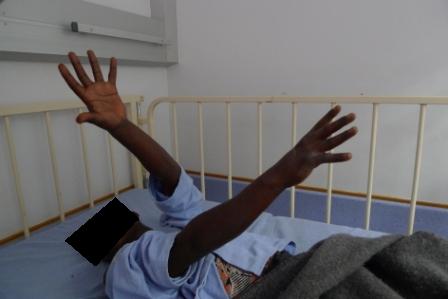
You don't see this very often - "waxy flexibility" in a patient with catatonic schizophrenic.

I had a beard.
Now I don't.


You may remember from previous posts the young HIV positive man with diffuse Kaposi's Sarcoma. He is receiving chemotherapy and doing very well; he's now walking.
My friend, an exceptionally strong willed young man, living with Kaposi's Sarcoma and improving every day. You may also notice my terrible moustache.


Finally - if you get bitten by a human, seek medical attention early. This guy waited for 10 days and his index finger became infected down to the bone. I thought this was a bit of pus, but when I wiped away the debris this piece of bone came out. Remember, humans have filthy mouths.